
In 2025, GIST reviewers continue to make outstanding contributions to the peer review process. They demonstrated professional effort and enthusiasm in their reviews and provided comments that genuinely help the authors to enhance their work.
Hereby, we would like to highlight some of our outstanding reviewers, with a brief interview of their thoughts and insights as a reviewer. Allow us to express our heartfelt gratitude for their tremendous effort and valuable contributions to the scientific process.
Antonella Venturino, Oncologia Medica & Innovation, Italy
Gaku Chiguchi, Yokohama Rosai Hospital, Japan
Antonella Venturino

Dr. Antonella Venturino graduated in Medicine in 1991 and specialized in Medical Oncology at the University of Genoa, Italy, in 1995. She conducted clinical and research activities first at the National Cancer Research Institute in Genoa, then at other hospitals (Alba-Bra, Sanremo, and Imperia). Over the past 15 years, her clinical and scientific focus has centered on gastrointestinal tumors—specifically on outcome measures, the growth kinetics of metastatic tumors (including serum tumor marker behavior during treatment), and the analysis of prognostic variables. She also collaborates on developing diagnostic and therapeutic guidelines and algorithms. Currently, she practices as a medical oncologist in Imperia, Italy, and partners with Oncologia Medica & Innovation to develop scientific research projects and disseminate the latest oncology advancements. Beyond observational studies and literature reviews in gastrointestinal tumors, she has engaged with innovative aspects of clinical practice: contributing to multiple book chapters, collaborative publications, and recently completing an editorial project as author on prognostic factors in metastatic gastrointestinal tumors. Connect with her on LinkedIn.
Dr. Venturino thinks that a review, by definition, should always be constructive—even if the manuscript recommendation is negative. The peer-review process, she emphasizes, should serve as an opportunity for cultural growth for both authors and reviewers, guided by scientific expertise, ethical standards, and professional criteria. Any review that fails to uphold this approach is destructive and should be avoided entirely. She notes an exception: in cases of obvious plagiarism, undisclosed conflicts of interest, or ethical principle violations, the article must be firmly rejected. However, judgments on such issues should be communicated confidentially to the journal editor, not framed as unconstructive feedback to authors.
Dr. Venturino believes that the primary limitation of the current peer-review system is the frequent ability of reviewers to know authors’ names and affiliations—introducing risks of personal bias (even unintentional). She proposes that a fully blinded process (concealing author identities and affiliations) would ensure greater impartiality in judgments. Additionally, she suggests streamlining the process: editors should directly reject manuscripts with clear lack of scientific rigor or moral principles, without initiating formal peer review. This avoids wasting reviewers’ time on unsound work and prevents the risk of destructive reviews stemming from frustration with flawed submissions.
“The workload of physicians/researchers is constantly increasing and increasingly burdened by bureaucratic obligations. However, since I believe that continuous scientific updating is an integral part of the profession, for which it is absolutely essential to devote time, I think that the activity of reviewer also falls within this same time frame, which should be better guaranteed as an integral part of clinical activity. In fact, engaging in the peer-review process offers a unique opportunity to update and develop scientific and cultural skills through the suggestions and responses of authors, with the aim of contributing to the improvement of the paper submitted. Since much of professional development is based on literature review, it is important that reviewers can contribute in some way to ensuring that only methodologically and scientifically valid articles on relevant topics are published, adding new insights to existing data. Ultimately, contributing to the peer-review process is essential if you want to continue receiving qualified updates,” says Dr. Venturino.
(by Lareina Lim, Brad Li)
Gaku Chiguchi
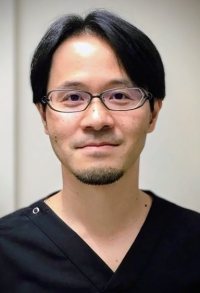
Dr. Gaku Chiguchi, MD, PhD, is a gastroenterologist and oncologist with specialized expertise in gastrointestinal stromal tumors (GIST). He earned his medical degree from Yamagata University in 1997 and a PhD in Medicine from Yokohama City University in 2002. Currently, he practices at the Department of Gastroenterology, Yokohama Rosai Hospital in Yokohama, Japan—where he leads a GIST-focused outpatient clinic—and also serves as Director of Myojindai Clinic in Yokohama. As a board-certified specialist in internal medicine, gastroenterology, gastrointestinal endoscopy, and oncology, he is an active member of prominent professional societies. These include the Japanese Cancer Association, the Japan Society of Clinical Oncology, and international organizations such as the American Society of Clinical Oncology (ASCO) and the American College of Physicians. With over 20 years of clinical and research experience in GIST, his current focus centers on tumor rupture and management strategies for GIST beyond disease progression.
GIST: What role does peer review play in science?
Dr. Chiguchi: Peer review is essential for upholding the reliability and credibility of scientific research. It enables independent experts to assess a study’s design, results, and conclusions prior to publication. Through this process, errors and weaknesses can be identified and addressed, ensuring scientific progress is built on sound evidence. I view peer review as a shared responsibility among researchers to preserve the quality and trustworthiness of academic work.
GIST: What reviewers have to bear in mind while reviewing papers?
Dr. Chiguchi: Reviewers should approach each manuscript with fairness, respect, and an open mind. They must evaluate the validity of data, the logic of analysis, and the strength of conclusions—rather than relying on personal opinions or preferences. Confidentiality and bias avoidance are fundamental principles. Additionally, reviewers should strive to provide specific, constructive feedback that helps authors refine their work and ultimately advance the field.
GIST: The burden of being a scientist/doctor is heavy. How do you allocate time to do peer review?
Dr. Chiguchi: Balancing clinical practice and research is indeed challenging, but I prioritize peer review as part of my professional responsibility as a GIST specialist. I often review manuscripts during commutes, lunch breaks, evening hours after clinical duties, or on weekends when time allows. I try to embrace these moments, valuing the opportunity to contribute to GIST research advances while deepening my own clinical and scientific understanding of this rare disease. Peer review not only supports the GIST research community but also keeps me critical and up to date in this rapidly evolving field.
(by Lareina Lim, Brad Li)
